

Thinking of upgrading your old boiler at home? If you’re ready to upgrade your heating system but the systems covered under the Boiler Upgrade Scheme aren’t suitable for your household, a modern boiler could make a sensible and cost-effective choice.
Choosing the right boiler model for you and your family is a key decision. It affects your overall comfort through the summer and winter months, and hot water every day for your baths and showers. Boilers come in two main types: internal and external. Knowing the differences between these two options can help you to make the best decision for your household.
Internal boilers
Also known as indoor boilers, these are installed inside homes.
They’re often fitted in a utility room, kitchen, or a large bespoke cupboard in either room. Many families choose to cover their boiler to improve their interior aesthetic and style. These are some of the most common types of boilers found in homes in the UK. An example is a For example, a Worcester Bosch combi boiler for on-demand hot water and heating.
- Advantages of internal boilers
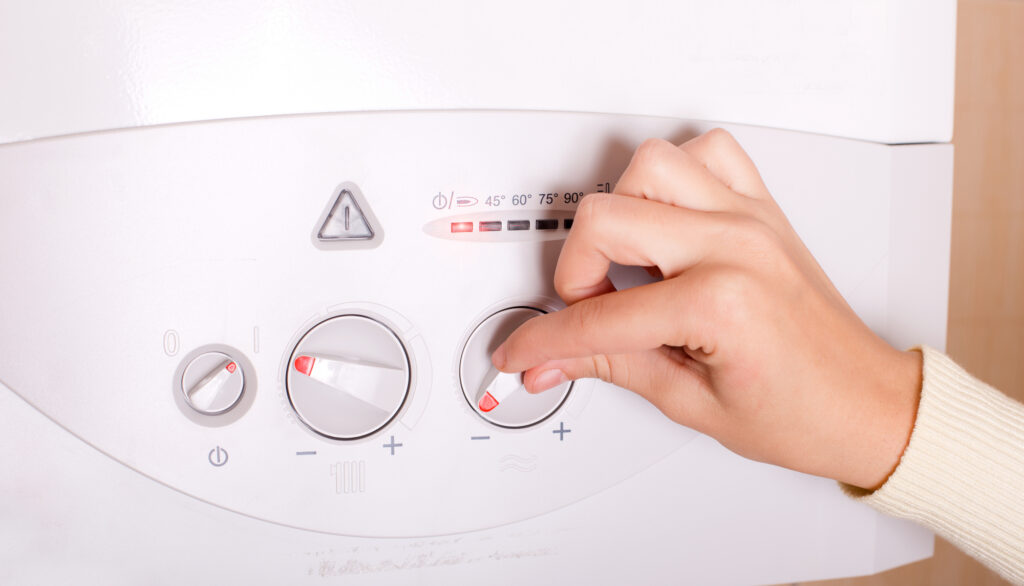
Convenience: When the boiler is located inside the house, it typically allows easier access and faster maintenance too. If there are control panels or timers on the boiler, this installation also makes it easier for families to adjust their heating. It’s also easy to find a reputable boiler engineer to install and maintain the boiler.
Protection: Inside a home is a more stable environment than outside in the elements. Because internal boilers are sheltered from all weather conditions, their lifespan can be longer than external boilers.
Efficiency: Indoor boilers are generally more efficient, because they don’t lose any heat to the outside air. This can result in lower bills for families.
- Disadvantages of internal boilers
Space consumption: Boilers naturally take up some valuable space inside the home. In smaller properties, this can be a drawback, since it reduces space available for relaxing, living, or storing things.
Noise: While modern boilers have been developed to be as quiet as possible, having one in the house does come with some inevitable noise.
External boilers
External or outdoor boilers are installed outside a property. They’re usually housed in weatherproof covers to protect them from weather. While less common, they can be hugely beneficial in certain situations.
- Advantages of external boilers
Space-saving: Space is freed up inside the home if the boiler is outside. This can be invaluable in very small family households.
Reduced noise: By placing the boiler outside, operational noise can be compartmentalised and kept away from the living areas.
Safety: Indoor boilers, particularly older ones, can be seen as a carbon monoxide risk inside the house. But outdoors, potential leaks won’t affect the family.
- Disadvantages
Exposure to weather: External cases and bodies are designed to withstand harsh weather, but they’re still more susceptible to damage compared to indoor boilers. This may lead to higher maintenance costs and shorter lifespans.
Installation costs: Because installing an external boiler is more specialised, it can be more expensive. Plumbers might need additional piping and unique weatherproof housing.
Accessibility: Maintenance and repairs can be more challenging outdoors, especially in bad weather. This might be more inconvenient for the technicians on call, too.
Overview
Both internal and external boilers offer distinct advantages and disadvantages to households. Indoor boilers are far more common due to their convenience, efficiency, and better protection from harsh weather. With the small compromise of some noise and space taken up inside the home, they’re typically a better solution for family households.


