

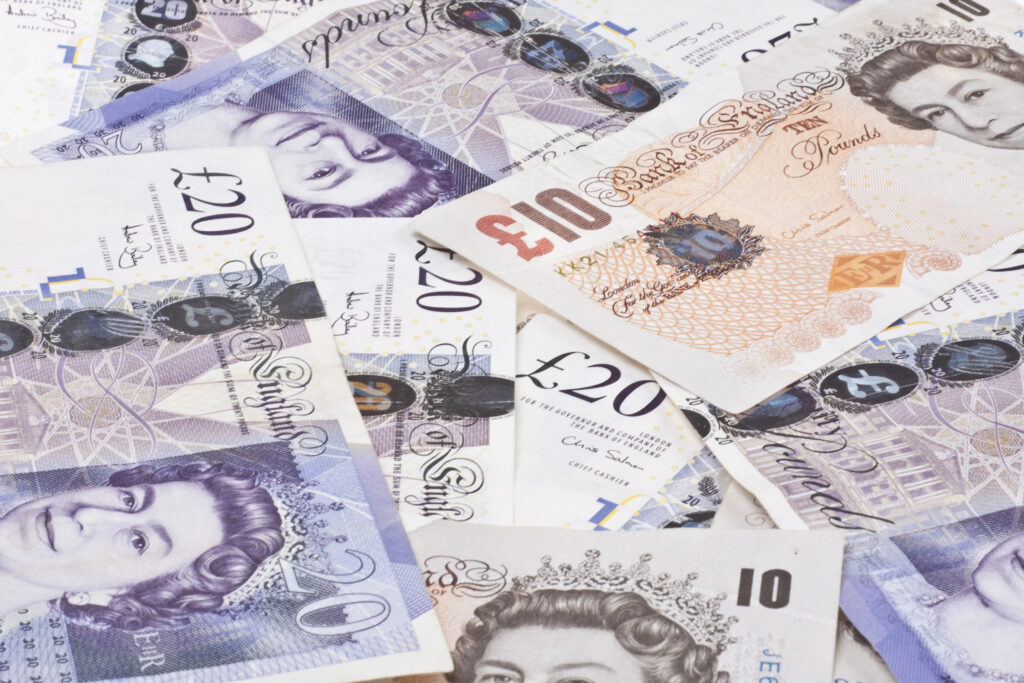
When making long-term financial moves, you need to account for how regulatory and economic changes can influence the strength and impact of your money. Your £1 can be worth less or more based on factors like inflation, GDP growth, and others beyond your control. Here are a few of these trends that can influence the value of your savings and how you can better control your financial present and future.
Interest Rates
Interest rates are one of the most important things you must track when making significant purchases or launching a business. The cost of accessing debt is one of the most critical factors that can influence the value of the money in your account. If you have £100,000 saved where the interest rate is 2.5%, the same amount of money would be worth significantly less when the interest rate is 4% because your money would be underperforming. This is because when central banks increase interest rates, the cost of borrowing also increases, making it more expensive to buy things. Typically, the value of your money in terms of what it can purchase significantly reduces.
At the same time, if you borrow £100,000 at an interest rate of 4%, you’re getting a worse deal than someone who borrowed the same amount at 2.5%. Your repayments will be higher and may take longer to complete.
That’s why you want to monitor macroeconomic factors and market trends like these through an app like TradingView, where trends are visualised more easily and clearly. Keeping track of critical economic factors influencing rate cuts is a great tip because it helps you stay prepared. Your money can be worth more or less depending on when you choose to make purchases and the type of contracts you sign, and it’s better to know when these changes occur.
Inflation and PPP

Inflation is the rate of change of currency (or economic) value. It is an essential metric to track, and unlike interest rates, it is harder to manage. Inflation is a function of how quickly or poorly a currency loses value, and it can be influenced by factors like economic output, the rate of new money creation, and spending habits within an economy.
Low inflation is great, but when it gets too low (deflation), it can negatively affect economic output, while high inflation leads to financial uncertainty. Deflation typically refers to situations where there is a significant decrease in the price levels of goods and services in the country. While this might sound like a positive thing, it can be a problem if it persists. When prices are falling, businesses may see a decrease in their profits and be forced to cut costs, potentially leading to job losses and decreased economic activity.
Meanwhile, high inflation comes with its share of problems as well because prices are often high and unstable at times like this. If you have £100,000 saved up while the inflation rate is 3%, your savings will be worth more than if you had the same amount with 5% inflation rate. It’s important to understand how all of these factors affect your money. Also, keep in mind that inflation rates cannot be changed instantly like interest rates; macroeconomic movements are necessary to make changes.
Currency Exchange Rate Influence on Travel and Business
Your savings do not exist in a vacuum because the Great Britain Pound Sterling (GBP) operates in an international ecosystem of currencies. Citizens want their currency to be as strong as possible so their purchasing power can be stronger when they holiday or do business overseas. Imagine how much more value you could get if the GBP suddenly became worth 2 Euros.
Alternatively, the global economy is competitive, importers are always looking for the best deal possible, and a country’s products can become prohibitively expensive and get less demand if its currency value increases significantly. This can lead to economic slowdown, job losses, and lower foreign exchange earnings. It’s not hard to understand that your local currency’s growing value increases the value of your savings and vice versa. Import-based businesses do well when currencies are strong, while the reverse is the case when a country’s currency is weak.
Tariffs
Tariffs have become a significant point of contention in recent months because of Trump’s unprecedented decision to levy tariffs on neighbouring countries. Why are tariffs a vital consideration when you’re saving up for big purchases? Imagine you’ve saved up for years to buy your dream car made in the USA by an American manufacturer. The currency price is £40,000, but it rises to £50,000 overnight because of a 25% tariff on vehicle imports. This is the reality of many who tariffs have directly impacted. Significant value has been wiped away from their finances.
The opposite is the reality when tariffs and trade barriers are dropped. Imagine how much more money you would have if the current 20% import levies you have to pay disappeared overnight? The value of your savings can be influenced by tariff decisions made from thousands of miles away.
Grow Your Money
You have little to no impact on the macroeconomic activities that can influence the value of your savings; that’s why you must ensure you take measures to grow your savings and stay one step ahead of regulators and policymakers who may not have the same interests as you. It’s easier than ever to invest your sterling into the financial market and grow it over time. Forex, crypto, commodities, stocks, bonds, and mutual funds are examples of financial instruments you can invest your money in today without the need to go through a broker.
In addition, advanced trading applications like TradingView help you keep track of economic news and elements influencing your money through the investment features and instruments available to retailers. Learn how to use these tools to your advantage while exploring possible assets that can significantly increase your earnings.
Your Savings Need to be Saved
The global economy often seems like it was designed to reduce as much of the value of your savings as possible. However, a better understanding of macroeconomic forces will help you take the necessary action to preserve your hard work. It’s not enough to save your money; you need to save it from losing value.