If you don’t take on many DIY projects, every screw can look kind of the same. It is the most important fastener you will come across, and you need to get the right one for the project that you are undertaking.
Wood screws are probably the most common type of screw you will find. With a little bit of help, you can know all there is to know about wood screws, the different sizes and materials, and how to properly use them.
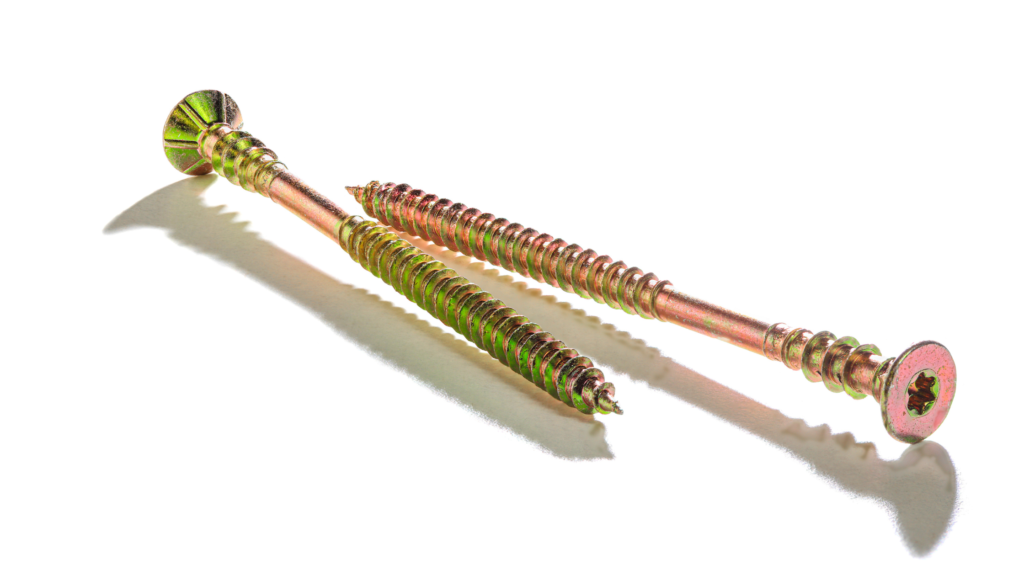
What are Wood Screws?
What some DIYers don’t realize is that there are screws that have specific uses. For a material like wood, which can splinter and break apart, you need to have the right fasteners. That means having screws for wood. They work with softwood, hardwood, MDF, and chipboard.
Taking on your own projects can save you money, but not if you are doing damage to the materials in the process. With the proper wood screws, you will ensure that everything is properly secured without cracking, splintering, or breaking the pieces that you are working on.
The Different Types of Wood Screws
There are generally two types of wood screws. You will find those that are partially threaded and those that are fully threaded. Steel screws – also known as ‘production screws’ – are the best for interior DIY and woodworking because they have great versatility and strength. You will find different points and thread pitches, each that has the necessary sharpness and strength to get into the appropriate type of wood.
Wood screws also have the distinct point at the end of the shaft. The point works to penetrate even the hardest wood and allows the screw to be guided into position with accuracy and precision. The threads will wrap around the shank, giving the screw the ability to drive in. If you’re working with plywood and softwoods, coarse threads are ideal while fine threads are better for hardwoods.
Installing Wood Screws
The biggest factor for using wood screws for wood is to pick the right strength and length. The last thing you want is to choose a screw on a whim only to find out that it’s not going to hold up, potentially damaging the wood that it is being screwed into. The right screwdriver bit is necessary as well to prevent bottoming out the head.
When you install wood screws for wood, start by marking out your spot. This is the spot where your pilot hole will go (it may not be 100% necessary for a pilot hole but it’s always a good idea). Drill the area – marked with a cross – to create the hole. When you feel comfortable with the size, drill the screw in either by hand or with some sort of power driver. Just watch your speed because too much speed and torque can create stripping of the threads.
Know the Head Types
Another important aspect of choosing the right wood screws is knowing the different head types. Each requires a different drive, though there are a few main ones. The slot head – also known as flat head – is maybe the most common type, featuring a simple slot. The other common head type is the Phillips head, which is in a cross pattern. There are slipping concerns with Phillips head screws, however.
You may also find square or Robertson screws. The head is square, which drastically reduces the chance of slipping, though they are most common when talking about pocket screws. Finally, there is the star head pattern. These are most ideal for woodworking applications and can be fitted with reliability while providing a ton of torque.