The forest-coloured palette consists of rich earthen tones that can achieve highly sophisticated looks and that can flatter anyone who wears them. Drawn from the naturally occurring palette of forest greenery and the surrounding nature, forest colours can range from the deepest shades of hunter green to rich browns that you see on tree bark or on the forest’s earthen floor.
Forest colours are highly versatile and appeal to a diverse range of fashion sensibilities. They can be bold or understated and can harken to either the classic or the contemporary, making them a perfect choice for anyone looking to expand their wardrobe with timeless and on-trend colours.
If you’re thinking about dressing up in these tones and curating gorgeous new outfits, here are some styling pointers that should prove useful:
1) Get to Know the Palette
Contrary to what many people assume, green hues are not the only stars of a forest-coloured palette. This palette also includes colours that mirror the natural shades of dense woods and leafy canopies. In addition to shades of green like moss and olive, also think of earthy tones like browns, tans, and greys.
Greater knowledge of this palette will be the key towards effectively incorporating its colours into your wardrobe. Buy tights and other forest-colored basics to match statement pieces like a hunter green paired, a lush moss green silk blouse, and a tailored skirt in a hue like mahogany.
2) Choose the Right Shades for Your Skin Tone
To look radiant and stunning in forest colours, you should also select the right shade for your skin tone. If you can find your shade match in this palette, the colours will enhance your appearance and highlight the beauty of your natural complexion.
Lighter skin tones suit softer greens, like sea green or light olive, because they add a gentle pop of colour without being too overwhelming for the eyes. Darker skin tones are great for richer, deeper greens like juniper or sage green, which will provide a striking contrast and enhance the skin’s natural undertones.
With these shade matches in mind, if you’re on the fair side, you can don an olive green dress for a subtle yet impactful look. Meanwhile, don’t hesitate to rock a rich emerald green ensemble for added sophistication and depth if you have a darker skin tone.
3) Mix and Match Forest-Inspired Textures
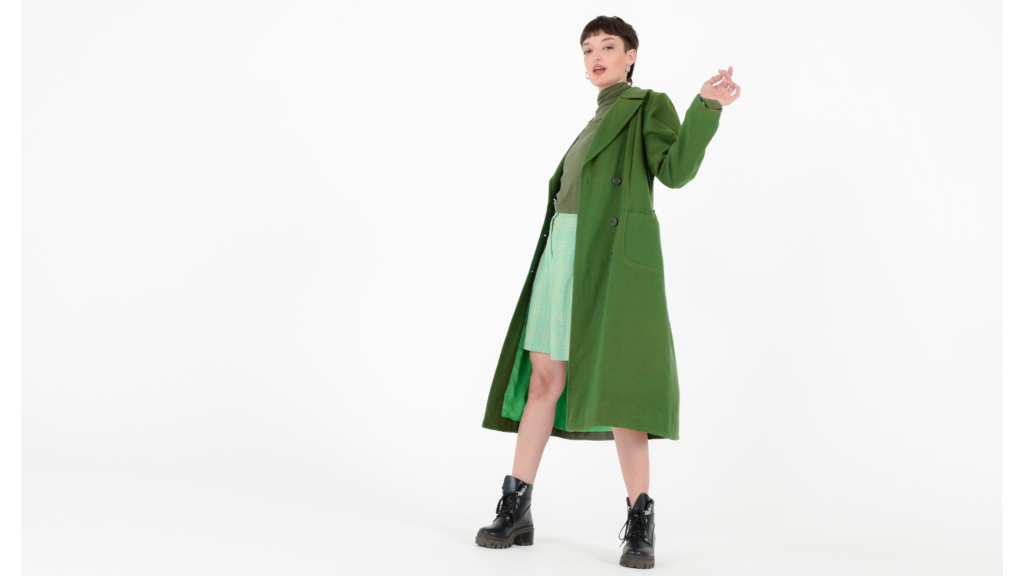
One of the joys of dressing in forest colours is the opportunity to play with textures. These hues lend themselves beautifully to various fabrics and finishes, which means that you can create stunning and unique outfit compositions out of them.
Try, for example, pairing a sheer fern green top with a roughly textured brown tweed skirt for a dynamic contrast that makes a very natural impression. If you’re going for a more relaxed yet fashion-forward fit, don a walnut or hickory-coloured wool sweater over sleek dark green trousers. This interplay of textures will add visual interest to your outfit and allow each piece to stand out, achieving an ensemble with detail and depth.
4) Experiment with Patterns
Aside from mixing and matching textures, you can also play with patterns in forest tones if you want more playful and out-of-the-box looks. Plaids, florals, or stripes in shades of green, brown, gold, and gray can break the monotony of solid colors and add depth and character to your outfit.
A floral print dress in shades like Kelly green, celadon, or avocado green can be a refreshing addition to a summer wardrobe, while a plaid shirt in dark green and brown hues can lend a cosy feel to a winter ensemble. Just remember that when you’re experimenting with patterns, it’s important to balance them with simpler pieces to avoid overpowering the whole look.
5) Balance Your Look with Neutrals
If you’re intimidated by the boldness of some forest-coloured hues, you can combine them with neutral colours to mellow out your appearance. Neutrals like beige, cream, white, and black can be mixed with forest colours to allow the latter to pop in a pleasant way.
A sumptuous viridian blazer will look more laid-back and approachable when paired with a crisp white shirt and black trousers. Similarly, a get-up anchored on a goldenrod top can be softened with a beige cardigan or tailored pants, creating a refined and understated look for you. This approach will make forest hues endlessly more wearable to beginners and will add a modern twist to classic styling.
6) Use Forest-Toned Pieces as Accent Colors
Do you prefer a more subtle approach to incorporating forest colours into your outfits? Try using them as accent pieces instead. Wear accessories like a jade green scarf or a sandalwood handbag, which can add some lively colour to an otherwise monotonous or neutral outfit.
Similarly, a pair of army green shoes or an amber-coloured belt can elevate an understated ensemble based on “safe” neutral colours. The accenting strategy is a great way to experiment with the forest palette without committing to a complete outfit, allowing for versatility and a gentle introduction to the broadness of the palette.
Emulating Timeless Elegance with Forest-Hued Fashion
Hues that are inspired by the beauty and bounty of the forest will surely encourage you to create grounded but sophisticated outfits that are perfect for a variety of occasions. Use these tips to experiment with different shades, textures, and layering techniques related to the forest palette, and soon enough, you’ll be able to own it like it’s second nature.