Updated: 25.06.26
Whether you’re looking for simple weekend DIY projects or planning a complete garden makeover, these practical garden improvement ideas will help you create an outdoor space you’ll love spending time in.
When we first moved into our home, our garden was somewhere we looked at rather than somewhere we actually used. We’d occasionally have a barbecue in the summer, but for most of the year it was simply another job on the to-do list.
Over the last few years, we’ve gradually transformed it into one of our favourite places to relax. Rather than spending thousands all at once, we’ve made improvements little by little. One of my favourite additions has been creating a stone pathway leading down to our decked seating area, where we now have a pergola and hot tub. It feels like a proper outdoor room and has completely changed how we use our garden throughout the year.
The best part is that you don’t need a huge budget to make a noticeable difference. Sometimes it’s the simplest changes—a fresh coat of paint, better lighting or more comfortable seating—that have the biggest impact.
Whether you’re working with a compact courtyard or a large family garden, these garden improvement ideas will help you create an outdoor space that’s practical, relaxing and beautiful throughout the seasons.
1. Refresh Your Garden with Paint
One of the quickest and most affordable ways to improve your garden at home is with a fresh coat of paint.
After months of rain, frost and sunshine, fences, sheds and wooden planters can start looking tired and faded. Giving them a new lease of life instantly makes the whole garden feel cleaner and more cared for.
If you’re repainting your fencing, don’t automatically reach for the same colour you’ve always used. Modern shades such as anthracite grey, sage green and charcoal black have become incredibly popular and create a contemporary backdrop that really helps flowers and shrubs stand out.
Even painting old terracotta pots or wooden planters can make everything feel coordinated without spending a fortune.
Top Tip: Before painting, give fences a good clean with a pressure washer or stiff brush to remove dirt and algae. The finish will last much longer.
2. Reduce Maintenance by Switching to Artificial Turf
If you spend every weekend mowing the lawn instead of enjoying it, it may be worth considering switching to artificial turf.
Modern artificial grass has come a long way in recent years and many options look surprisingly realistic while requiring very little maintenance. It’s particularly popular with busy families, pet owners and anyone who wants a lush green lawn all year round without the constant upkeep.
Artificial grass also works well in shaded areas where natural grass struggles to grow and can help reduce muddy footprints through the house during wetter months.
Although it’s a bigger investment than reseeding a lawn, the time you’ll save on mowing, watering and lawn treatments can make it worthwhile in the long run.
If you prefer a natural lawn, regular feeding, scarifying and overseeding can also make a huge difference to its appearance.
3. Add Lighting to Completely Transform the Space
Lighting is often overlooked, but it’s one of the easiest ways to make your garden feel more inviting.
During the day your garden should look beautiful, but with the right lighting it becomes somewhere you actually want to spend time once the sun goes down.
Think beyond a single security light. Layering different types of lighting creates a much warmer atmosphere.
Ideas include:
- Solar stake lights along pathways
- Festoon lights above patios
- Fairy lights wrapped around pergolas
- Spotlights highlighting trees or water features
- Lanterns on outdoor dining tables
We’ve added lighting around our pergola and decking area, and it’s made such a difference. Sitting in the hot tub on a summer evening with soft lighting around us makes the garden feel almost like being on holiday.
If you’re replacing existing lighting, energy-efficient LED or smart outdoor lighting can also help keep electricity costs down.
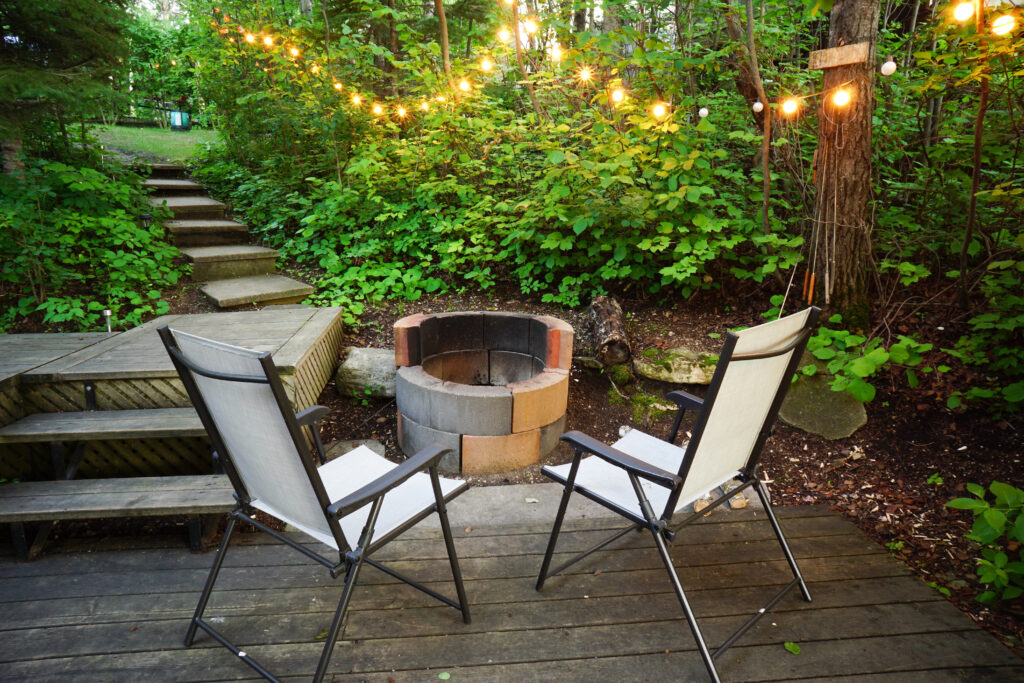
4. Create a Relaxing Space You’ll Actually Use
One thing I’ve realised is that gardens shouldn’t just be beautiful—they should be somewhere you genuinely enjoy spending time.
Creating a dedicated relaxation area doesn’t require a huge garden. Even a quiet corner with comfortable seating can become your own little escape after a busy day.
One of the easiest ways to create that feeling is by adding a hammock between two sturdy posts or trees. There’s something incredibly relaxing about reading a book while gently swaying outdoors during the summer months.
For us, our biggest garden project has been creating our decking area with the pergola, stone pathway and hot tub. Instead of feeling like separate features, everything now flows together, making the garden feel much larger and far more inviting.
Think about adding:
- Outdoor rugs
- Comfortable cushions
- Potted plants
- Side tables for drinks
- Shade from a pergola or parasol
- A fire pit for cooler evenings
- A hot tub for summer evenings
You don’t need to do everything at once. Building your perfect relaxation space gradually often makes it feel even more rewarding.
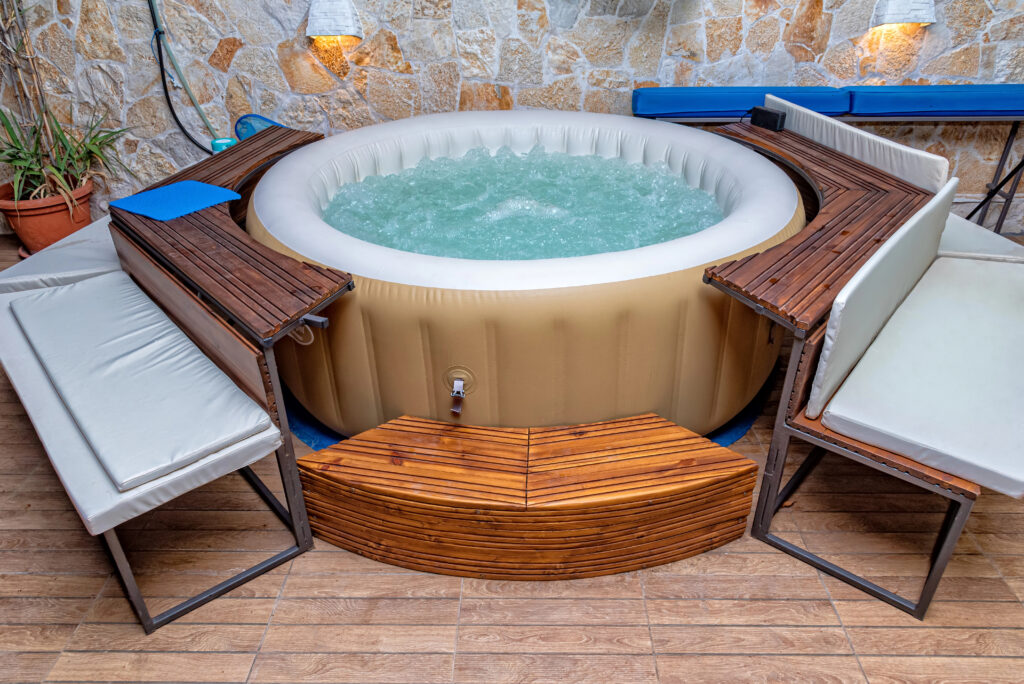
5. Replace Your Outdoor Furniture
Dare I say it? If you haven’t replaced your outdoor furniture in a long time, now could be the perfect opportunity.
Replacing garden furniture is often one of the more expensive improvements you can make, but it can completely transform how often you use your outdoor space. The right furniture doesn’t just look good. It encourages you to spend more time outside with family and friends.
When choosing new furniture, think carefully about how you actually use your garden. If you love entertaining, a large dining table might be the best investment. If your garden is your place to unwind after work, a comfortable corner sofa or reclining chairs could be a better option.
The best garden furniture matches the aesthetic and ensures that everyone is comfortable. It is, however, important that you look at your outdoor furniture and ensure that it’s the right style and size for the space. You should also check the materials. You want to know that you are using the weatherproof stuff!
Depending on your budget, you could update your existing furniture with new cushions, invest in a stylish lounge set, add a fire pit as a focal point or choose a picnic table that’s perfect for family meals outside.
I’d always recommend visiting your local garden centre if possible. Seeing furniture in person makes it much easier to judge quality and comfort before buying.
6. Create Different Zones Within Your Garden
One of the biggest changes we’ve made is thinking of the garden as several different spaces rather than one large area.
Creating zones instantly makes a garden feel more organised, more functional and often much larger than it actually is.
For example, you could have:
- Dining area.
- Relaxation zone with seating or a hot tub.
- Vegetable garden.
- Wildlife-friendly corner.
- Play area for children.
Even if you only have a small garden, using planters, raised beds, decorative screening or different paving materials naturally separates each space.
Our stone pathway leading down to the pergola has helped connect different parts of the garden while making everything feel intentional rather than simply placed wherever there was space.
If you have children, giving them their own dedicated play area also helps keep footballs, toys and trampolines in one place, leaving the rest of the garden looking tidier.
7. Add a Statement Feature That Becomes a Talking Point
Every beautiful garden usually has one feature that immediately catches your eye.
That doesn’t necessarily have to be expensive.
Some ideas include:
- A pergola.
- A fire pit.
- A large sculpture.
- Oversized decorative planters.
- A water feature.
- A raised or stand-up fish pond.
Personally, I love incorporating water into a garden.
A water feature instantly creates a more peaceful atmosphere, while also attracting birds and other wildlife.
One of my favourite additions has been creating a wildlife pond. It’s incredible how quickly frogs, dragonflies and birds started visiting once it was established. If you’re thinking about creating one yourself, I’ve shared everything I learnt in my guide to creating a wildlife-friendly Blagdon pond.
If you don’t have enough space for a traditional pond, a stand-up fish pond is another fantastic option. These raised ponds create a beautiful focal point while allowing you to enjoy watching colourful fish at eye level. They’re often easier to maintain too, making them ideal for smaller gardens or patios.
Adding one statement feature often has far more impact than filling the garden with lots of smaller ornaments.
8. Grow Your Own Fruit and Vegetables
You don’t need a huge allotment to enjoy growing your own food.
Even a few raised beds or large containers can produce an impressive harvest throughout the summer.
Tomatoes are always one of my favourite crops because they’re relatively easy to grow and taste so much better than supermarket varieties.
Other beginner-friendly options include:
- Strawberries
- Lettuce
- Herbs
- Courgettes
- Runner beans
- Potatoes
Growing your own food isn’t just rewarding—it can also save money and encourage children to become more interested in healthy eating.
If you’re new to gardening, the Royal Horticultural Society has an excellent guide to growing your own tomatoes, which explains everything from choosing varieties to watering and feeding plants.
I’d also recommend adding herbs near your patio or outdoor dining area. Fresh basil, rosemary and mint are easy to grow and incredibly useful when cooking.
If you’re short on space, don’t forget that vertical planters, hanging baskets and wall-mounted pots allow you to grow plenty without sacrificing valuable patio space.
Budget vs Premium Garden Improvements
Not every improvement needs a huge budget.
Here’s a rough guide to the changes that make the biggest difference.
| Budget | Garden Improvement | Impact |
| Under £30 | Plant colourful containers | ⭐⭐⭐⭐ |
| Under £50 | Solar lighting | ⭐⭐⭐⭐ |
| Under £100 | Paint fences and sheds | ⭐⭐⭐⭐⭐ |
| £100-£300 | New planters and pathways | ⭐⭐⭐⭐⭐ |
| £300-£800 | Pergola | ⭐⭐⭐⭐⭐ |
| £500+ | Hot tub or raised fish pond | ⭐⭐⭐⭐⭐ |
One thing I’ve learnt is that lots of smaller improvements over time often have more impact than trying to redesign everything in one go.
Our garden certainly wasn’t transformed overnight, but every project has helped create a space we genuinely enjoy spending time in.
9. Make Small Gardens Feel Bigger
You don’t need a large garden to create a beautiful outdoor space. In fact, some of the most inviting gardens I’ve visited have been surprisingly compact because they’ve been designed so well.
One of the oldest garden design tricks is to use mirrors to create the illusion of extra space. Position a weatherproof mirror where it reflects flowers, greenery or an attractive feature, rather than fences or sheds, and your garden will instantly feel brighter and more open.
Other ways to make a small garden feel bigger include:
- Adding vertical planting with trellises or living walls.
- Choosing lighter-coloured paving to reflect more light.
- Keeping pathways clear and uncluttered.
- Using large pots instead of lots of small ones.
- Repeating the same planting colours throughout the garden to create a sense of flow.
Our stone pathway has helped draw your eye down through the garden towards the pergola, making the space feel much longer than it actually is. It’s a simple design trick, but one that’s made a real difference.
10. Encourage Wildlife Into Your Garden
One of the things I love most about spending time in our garden now is the wildlife.
Adding features that attract birds, bees, butterflies and frogs doesn’t just benefit nature—it also makes your garden feel alive.
There are lots of simple ways to encourage wildlife, including:
- Planting nectar-rich flowers for pollinators.
- Installing bird feeders and bird baths.
- Leaving a small area of the garden slightly wild.
- Adding log piles for insects and hedgehogs.
- Creating a pond or water feature.
Since adding our pond, we’ve loved watching dragonflies, birds and other wildlife visit throughout the year. It’s become one of my favourite parts of the garden and something we never expected to enjoy quite so much.
Seasonal Garden Maintenance Tips
Making improvements is one thing, but looking after them throughout the year will help keep your garden looking its best.
Spring
- Clean patios and decking.
- Feed your lawn.
- Repaint fences if needed.
- Plant summer-flowering bulbs.
Summer
- Water containers regularly.
- Deadhead flowers to encourage more blooms.
- Trim hedges.
- Clean outdoor furniture.
Autumn
- Sweep leaves from patios.
- Protect tender plants.
- Plant spring bulbs.
- Clean out ponds before winter.
Winter
- Cover delicate plants during frosts.
- Clean and store cushions.
- Check fences after storms.
- Plan next year’s improvements.
Spreading maintenance across the seasons makes every job feel much more manageable.
If I Was Starting My Garden Again…
Looking back, there are a few things I’d prioritise much sooner.
Firstly, I’d create a proper seating area from the beginning. Until we added the decking, pergola and comfortable seating, we rarely spent much time outside.
Secondly, I’d invest in lighting earlier. It’s amazing how much more usable your garden becomes once you can enjoy it after sunset.
Finally, I’d definitely create our pond again. Watching wildlife appear throughout the seasons has been one of the most rewarding parts of improving our garden, and it’s encouraged us all to spend more time outdoors.
One thing I’ve learnt is that you don’t need to complete everything in one summer. Gardens evolve over time, and that’s part of the enjoyment. Every improvement, however small, helps create a space that’s uniquely yours.
Frequently Asked Questions (FAQs)
What is the cheapest way to improve your garden?
Painting fences, adding solar lights, planting colourful containers and updating cushions are all inexpensive ways to make a noticeable difference.
Does improving your garden add value to your home?
A well-maintained garden can improve kerb appeal and may increase your property’s value, particularly if it creates usable outdoor living space that appeals to buyers.
Is artificial grass worth it?
Artificial grass can be a good investment for busy families or anyone looking for a low-maintenance lawn. Modern products are much more realistic than they used to be and stay green throughout the year.
How can I improve a small garden?
Use mirrors, create different zones, add vertical planting, choose multi-functional furniture and keep pathways clear to make the space feel larger.
What plants are easiest for beginners?
Lavender, geraniums, hydrangeas, herbs, tomatoes and strawberries are all excellent choices for beginners.
Is a pergola worth adding?
Absolutely. A pergola provides shade, defines a seating area and creates a focal point within the garden. Ours has completely changed how often we use the space.
Do ponds attract wildlife?
Yes. Even a relatively small pond can attract frogs, dragonflies, birds and beneficial insects, making your garden much more wildlife friendly.
How often should I repaint garden fences?
Most painted fences benefit from repainting every three to five years, depending on the weather exposure and the type of paint used.
What’s the best time of year to improve a garden?
Spring and early autumn are ideal for many landscaping projects, although smaller improvements such as painting, lighting and furniture can be completed throughout the year.
How do I make my garden more relaxing?
Focus on comfortable seating, soft lighting, planting, water features and creating a quiet space where you genuinely enjoy spending time.
My Final Thoughts…
Improving your garden doesn’t have to involve a complete redesign or an unlimited budget.
For me, it’s been about making gradual changes that encourage us to spend more time outdoors as a family. From creating our stone pathway and decking area to adding the pergola, hot tub and wildlife pond, every project has made the garden feel more like an extension of our home.
Whether you start with a fresh coat of paint, some new planting or a larger feature such as a pergola or pond, each improvement helps create a space you’ll enjoy for years to come.
I’d love to hear about your own garden projects too. Have you recently transformed your outdoor space, or is there something on your wish list? Let me know in the comments below. I always enjoy hearing your ideas and recommendations!