Layering is one of the most versatile skills you can master in fashion. It allows you to combine textures, colours, and styles to create a unique look that can adapt to any season or occasion. Whether you’re braving the cold winter months or enjoying the mild days of spring, knowing how to layer effectively is key to maintaining both style and comfort. This guide will walk you through the essentials of layering, providing tips and tricks for each season to help you elevate your personal style.
Understanding the Basics of Layering
Before we dive into seasonal specifics, it’s important to understand the basic principles of layering:
1. Start with a Base Layer
- Purpose: The base layer is your outfit’s foundation. It should be comfortable, breathable, and not too bulky since subsequent layers will be added on top.
- Materials: Opt for natural fabrics like cotton or moisture-wicking materials that provide comfort and regulate temperature.
2. Add Insulation
- Purpose: The middle layer provides warmth. This layer can be adjusted depending on the weather and your personal warmth preference.
- Materials: Wool, fleece, or down are excellent choices as they trap heat effectively.
3. Finish with an Outer Layer
- Purpose: The outer layer protects against the elements such as wind, rain, or snow.
- Materials: Waterproof and windproof materials like nylon or Gore-Tex are ideal for staying dry and protected.
4. Accessorise Thoughtfully
- Accessories like scarves, hats, and gloves not only add style but also provide extra warmth and protection.
Layering for Winter
Winter calls for warmth and cosiness, making it the perfect season to experiment with layering. Here’s how:
Fabric Choices
- Start with a thermal or merino wool base layer to provide warmth without bulk.
- Add a chunky knit sweater or cardigan for insulation.
- Top with a down or wool coat to shield against cold winds and snow.
Colours and Textures
- Darker hues are traditional for winter, but adding a pop of colour with accessories can brighten up your outfit.
- Mix textures like wool, leather, and faux fur for a rich, layered look.
Practical Example
- Base: Thermal long-sleeve top.
- Middle: Wool sweater.
- Outer: Puffer jacket.
- Accessories: Cashmere scarf, leather gloves, and a knitted beanie.
For Special Occasions
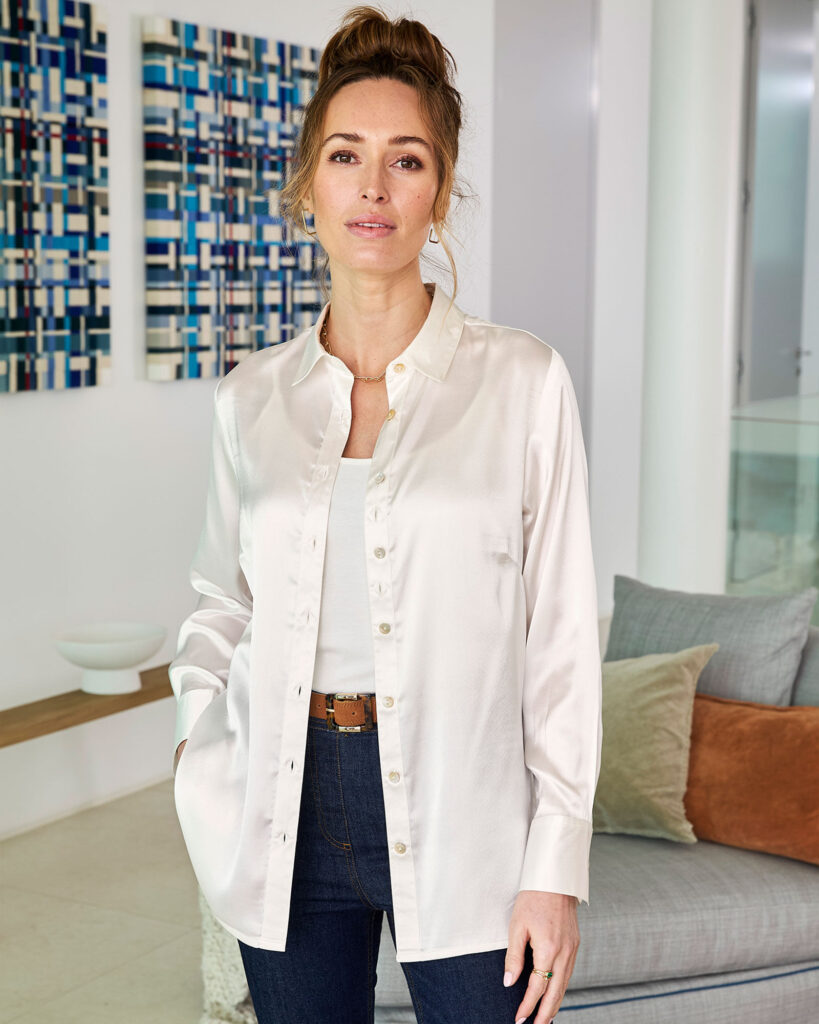
A satin shirt adds the element of sophistication and is absolutely gorgeous layered over a base layer like a cotton top.
I love this look from Cotton Traders:
Layering for Spring
Spring is all about transitional layering as the weather fluctuates between cool and warm.
Fabric Choices
- Light cotton or linen shirts make excellent base layers as they are breathable and comfortable.
- A lightweight cardigan or denim jacket can serve as a mid-layer.
- Finish with a trench coat for those unpredictable spring showers.
Colours and Textures
- Embrace pastel colours and floral patterns that reflect the season’s renewal.
- Experiment with layering different lengths, like a long cardigan over a short dress.
Practical Example
- Base: Cotton blouse.
- Middle: Light cardigan.
- Outer: Trench coat.
- Accessories: Silk scarf and waterproof booties.
Layering for Summer
Even in summer, layering can be useful for transitioning between the hot outdoors and cool indoors.
Fabric Choices
- Stick to lightweight and breathable fabrics like cotton, linen, and chiffon.
- A tank top or cami can be layered under a sheer blouse for an airy look.
- A light shawl or kimono can serve as an adaptable outer layer.
Colours and Textures
- Bright colours and bold prints are perfect for summer.
- Mix sheer and solid fabrics for a cool, breezy style.
Practical Example
- Base: Linen tank top or camisole.
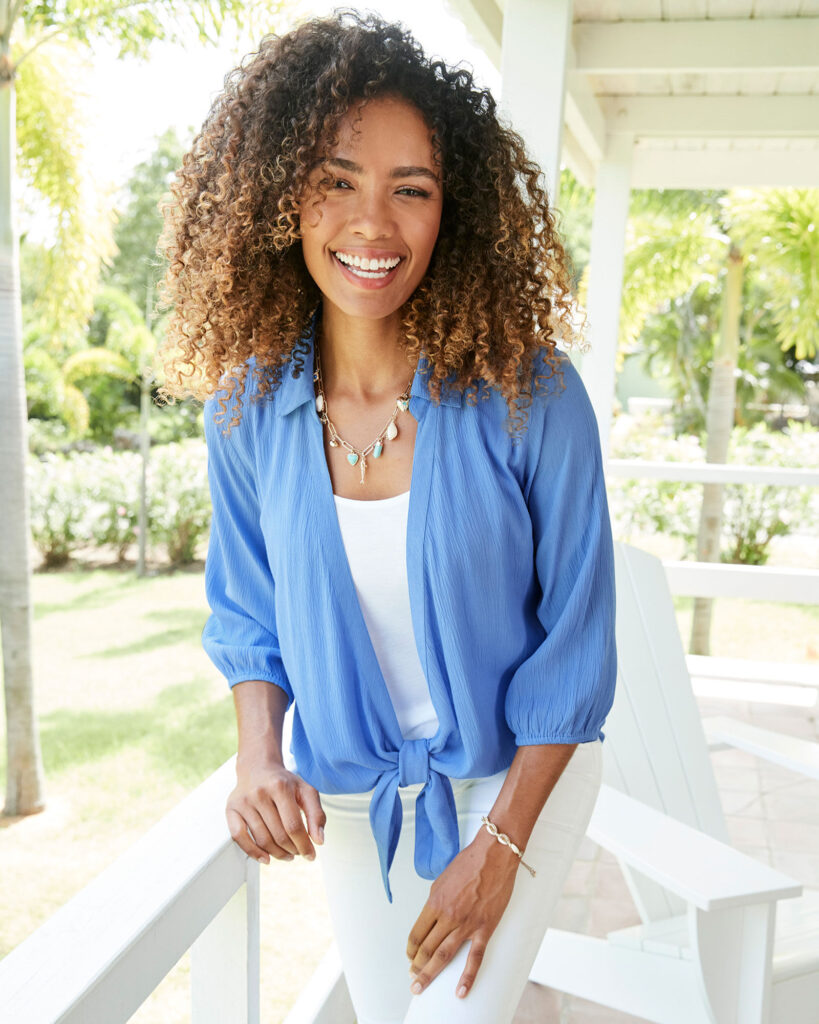
- Middle: Sheer blouse or tie-waist top.
- Outer: Lightweight kimono.
- Accessories: Straw hat and oversized sunglasses.
I love this look from Cotton Traders:
Layering for Autumn
Fall is the season where layering truly shines, allowing you to play with various textures and layers.
Fabric Choices
- Start with a soft cotton turtleneck as your base.
- Layer with a plaid shirt or a cosy flannel for warmth.
- Top with a leather jacket or a wool blazer for a chic, autumnal look.
Colours and Textures
- Earthy tones and rich colours like burgundy, olive, and mustard are ideal for fall.
- Combine textures like denim, wool, and suede for depth.
Practical Example
- Base: Cotton turtleneck.
- Middle: Flannel shirt.
- Outer: Leather jacket.
- Accessories: Wool fedora and ankle boots.
Common Layering Mistakes and How to Avoid Them
While layering can enhance your style, there are common pitfalls to be mindful of:
1. Over-bulking
- Solution: Opt for thinner layers that provide warmth without making you look bulky. Choose fitted rather than oversized pieces to maintain a streamlined silhouette.
2. Ignoring Proportion
- Solution: Balance is key. If you wear a bulky top layer, pair it with slim bottoms, like skinny jeans or leggings.
3. Clashing Colours/Patterns
- Solution: Stick to a cohesive colour palette and limit bold patterns to one piece per outfit to avoid visual chaos.
4. Neglecting Accessories
- Solution: Use scarves, belts, and jewellery to add interest and define your layers.
Conclusion
By mastering the art of layering, you can enhance your personal style and ensure you’re prepared for any season. Remember, layering is not just about practicality; it’s a way to express your creativity and individuality. With these tips and examples, you’ll be well on your way to creating stylish, layered outfits that reflect your unique style and keep you comfortable all year round. Happy layering!
Disclaimer: I was gifted some items in exchange for review