
Decks make homes more valuable, enhance convenience, and create enjoyable spaces for everyone. Whether you plan to use your deck all year round for entertainment or just for dining in the summer, adding a deck can improve your yard’s function and increase its property value.
Unfortunately, since the deck area remains outside throughout diverse climates and weather conditions, it needs consistent maintenance to stay in optimal shape and function well. Knowing which deck design will require the least upkeep while providing excellent aesthetic appeal and practical use can be difficult.
Like every other household, you probably choose not to dedicate your weekend to deck resurfacing tasks, which include repainting and refinishing your deck. Thankfully, you can choose from different low-maintenance deck materials on the market that require less maintenance and resist damage as well. This article will discuss several superb low-maintenance decking materials and explain why they stand out.
Composite Decking
Composite decking products emerged when the industry sought a new decking solution that required minimal upkeep, unlike traditional wood. This durable deck material is made from a combination of natural wood fibres and plastic. It’s the most preferred deck choice among customers because they don’t need to use stains or sealants to protect it, and it comes in different colours and styles.
Decks built with composite decking boards hold up well, despite constant use. They eliminate splinters and are easier to clean, making them perfect for homes with children or pets. However, the extended warranties and more realistic wood appearance push the cost higher. While darker-coloured boards may absorb and retain more heat in direct sunlight, this can be easily addressed by opting for lighter-coloured boards or installing the deck in shaded areas. These adjustments ensure your deck remains comfortable and practical even in sunny or warm climates.
Vinyl Decking
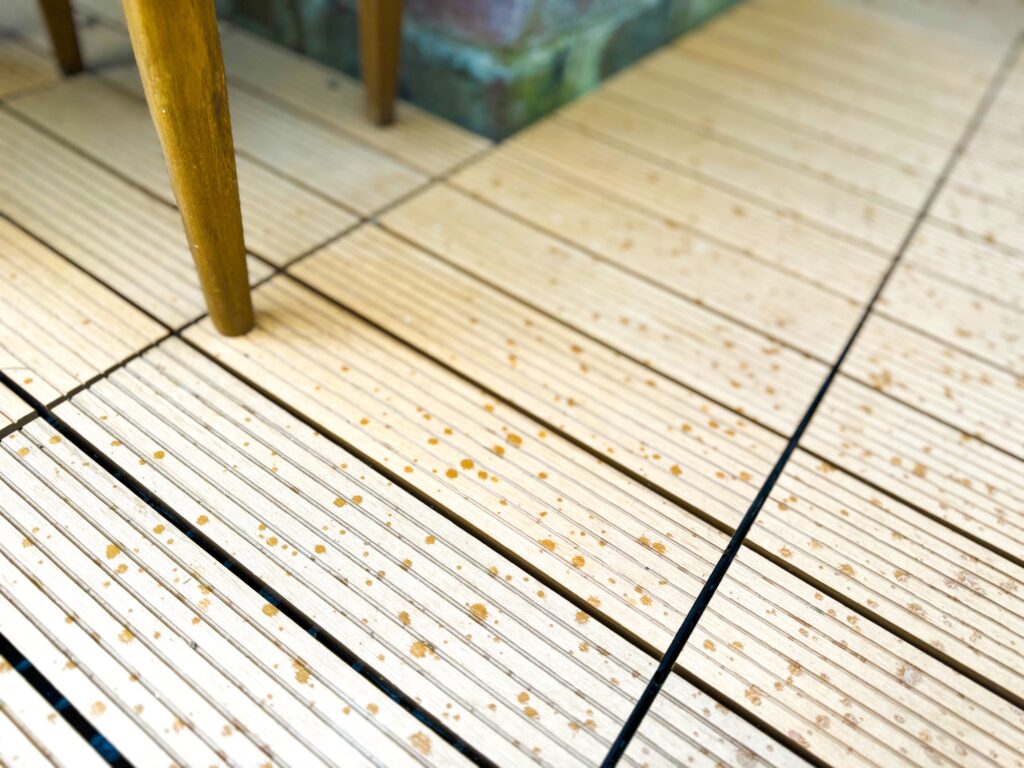
Vinyl decking is composed of PVC plastic, and it’s available in many colours and design options. Vinyl is a great option for busy families that don’t have time for substantial upkeep because it is simple to clean and doesn’t require any sealing or staining.
Sadly, it cannot handle severe temperature changes, as it melts at hot temperatures and develops fractures when cold. Additionally, vinyl decking becomes slippery during rain or snow, so opt for different decking materials when your family lives in wet climates.
Aluminium Decking
Aluminium decking offers a practical choice for homeowners seeking minimal upkeep decks. It shares similar durability and cleaning characteristics with composite decking. The aluminium deck feels comfortable to walk on or touch even in direct sunlight, thanks to its cool surface, which helps you avoid burning your skin.
Although it’s more expensive than other low-maintenance decks, aluminium decking won’t fade or stain over time. The drawback is that it has a noticeable sound that sends noise through your whole deck each time you step on it.
Fibre Cement Decking
Fibre cement decking is a new deck material. The material is incredibly resilient, requires low upkeep, and comes in different colours and stains. Also, it has a woodgrain texture, which helps the deck replicate its natural wood appearance.
However, its installation process falls below expectations. The production of fibre cement combines Portland cement with sand, silica, glass, and cellulose fibre to create a material that is durable and moisture-resistant. The downside is that the deck material becomes too dense and heavy, which makes it hard to handle during installation. This challenge makes the installation process very expensive despite the already pricey deck.
Pressure Treated Wood
When it comes to classic and low-maintenance decks, pressure-treated wood remains a strong choice. This wood deck naturally resists decay and damage from insects, making minimal protective coatings, such as sealing or treating, unnecessary.
You can customise the colour of pressure-treated wood decks by choosing from different staining options. However, the disadvantage is that these decks need more frequent upkeep than other decking materials, making them a poor choice for homeowners who want to enjoy free time with their families on weekends rather than work on their decks.
Plastic or PVC Decking
As the name suggests, this decking option is made of polyvinyl chloride, which is one of the most common plastics in the world. A highly versatile decking option, there is no argument that PVC decking represents a truly low-maintenance option, but there is something about the artificial look of plastic that puts many people off this solution.
Although this decking option arguably doesn’t look as stylish as some of the other low-maintenance options, it is particularly fade, stain, and mold resistant. Easy to look after, there is no staining, protecting, sanding, or painting required when you choose PVC. All of that said, PVC is typically a relatively expensive option.
Conclusion
To make your outdoor space comfortable for your family, you must choose durable deck materials that require little upkeep. In addition to the safety and comfort a deck brings, you should evaluate choices based on their functions and value to your space. The deck materials listed above come with several advantages, and It’s perfect for families who want to enjoy outdoor meals and make memories without spending hours scrubbing, sealing, or repairing their decks.


