

Photo: Unsplash
A beautiful home shouldn’t come at the cost of feeling comfortable in it. Constantly worrying about scratched furniture, messy surfaces, or children disturbing carefully arranged rooms can make everyday living unnecessarily stressful, leaving you feeling like a guest in your own home. Discover how to create a welcoming, stylish space that reflects your family’s lifestyle without sacrificing comfort, practicality, or peace of mind.
Ditching the Myth of the Fragile Show Home
Beautiful rooms don’t need to stay untouched. In fact, homes often look more welcoming when they include comfortable seating, family photographs and objects that reflect the people living there. A room designed only for appearance can quickly become stressful if everyone worries about leaving a mark.
Begin with how your family uses the space. If children draw at the dining table, place a wipe-clean mat nearby and keep art supplies in a closed cupboard. If the living room doubles as a play area, leave enough open floor space for games and avoid filling every corner with decorative furniture.
Think about safety as part of the overall design too. Royal Society for the Prevention of Accidents provides practical guidance for reducing common risks around the home. Securing tall units, managing blind cords and choosing furniture with rounded edges can all help. These measures are discreet, so they won’t spoil the room’s appearance.
A limited colour palette also keeps a busy family room visually settled. Repeat three or four shades across rugs, cushions and storage, then allow toys and children’s books to bring in brighter accents.
Fabrics That Handle Sticky Fingers and Spills
Choose fabrics based on how easily they can be cleaned, not simply how they feel on a showroom sample. Tightly woven materials tend to trap fewer crumbs than loose weaves, while mid-toned or subtly patterned upholstery can disguise small marks between cleans. Very pale sofas can work in family homes, but removable and washable covers will make them far easier to live with.
Check the care label before buying curtains, cushions or upholstered seating. Some covers can go into a washing machine, while others require professional cleaning. For a seat used every day, complicated care instructions may soon become tiresome.
Performance fabrics are another useful option. Many are designed to resist stains and moisture while retaining the softer finish expected in a living room. Test any cleaning product on a hidden area first and follow the manufacturer’s instructions. The Good Housekeeping Institute’s stain removal advice can help you deal with common spills without spreading the mark or damaging the fibres.
Keep a basic cleaning kit close by. A clean white cloth, mild upholstery cleaner and a handheld vacuum will handle many everyday mishaps before they settle into the fabric. Keeping these simple cleaning supplies nearby ensures your furniture stays pristine, just as preparing surfaces in advance helps you create a tough kitchen that withstands daily family chaos.
Choosing Durable Yet Stylish Furniture Pieces
Look for furniture that suits both the size of the room and the way your family relaxes. A compact corner sofa can provide additional seating without the need to scatter several chairs across the floor. Reclining seats may be ideal for family film nights, while a sofa with firm cushions will generally retain its shape better, even after children have been climbing on it.
When comparing stylish furniture, check the frame, upholstery care instructions and delivery dimensions as carefully as the colour. Measure doorways, stair turns and the intended floor area before ordering. Placing masking tape on the floor can help you visualise how much space a large sofa or corner unit will occupy, including the room needed to walk around it.
Storage Solutions That Hide Toys in Seconds
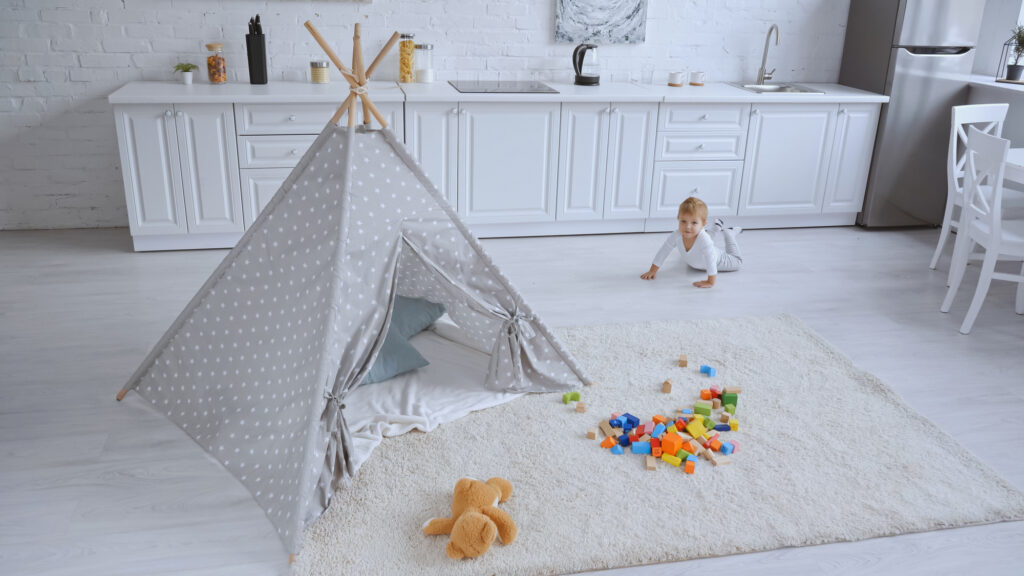
Combine low drawers, baskets and closed cupboards for quick, practical toy storage. Keep frequently used toys within children’s reach and use picture labels to make tidying easier. Store delicate items and small pieces on higher shelves.
Before buying organisers, sort through existing toys, remove broken items and measure your shelves. Leave some spare space for new toys and growing collections.
Maintaining a Space Parents Enjoy at Night
Establish a ten-minute routine that suits the room. Return toys to baskets, wipe down the main table and straighten the sofa cushions. A tray can gather remote controls, chargers and half-finished drinks in one quick sweep. If the children are old enough, ask them to put away one category of toys before heading upstairs.
Keep a few grown-up details visible throughout the day. A framed print, a favourite ceramic vase or a neat stack of books can prevent the room from feeling like a permanent playroom. Place fragile pieces on a high shelf and choose larger accessories that are less likely to be knocked over.
The best result is a room that changes pace without changing its identity. Once the toys are behind cupboard doors and the lamps are on, the same durable sofa that survived snack time can become a comfortable place to enjoy a quiet evening.