As a working mum juggling work and school holidays, finding the perfect balance between keeping my 9-year-old son entertained, educated, and productive whilst I work from home felt impossible. That was until we discovered Software Academy’s summer camps. Their focus on game design for kids meant my son could dive into an engaging and educational experience that truly captured his imagination.
Game Design for Kids: The Search for Something Special
When the summer holidays approached, I was dreading the usual cycle of screen time battles and “I’m bored!” complaints whilst trying to maintain my professional commitments. My son had always been fascinated by video games, constantly asking how his favourite games were made and dreaming of creating his own games someday.
That’s when I stumbled upon Software Academy and discovered game design for kids was an actual possibility not just a dream for my son. What immediately caught my attention was that they’re the UK’s only approved provider of NCFE Accredited Qualifications with University Level education for kids. This wasn’t just another summer activity. This was proper, recognised education that would give my son valuable skills whilst keeping him engaged.
Before we signed up, we took advantage of Software Academy’s one-to-one free taster session. This lasted around 45 minutes and was split between Python coding and game design. This relaxed introduction gave my son a chance to try out both activities with guidance from a friendly tutor. It was the perfect way to see if the program matched his interests and learning style. By the end of the session, it was clear he was truly engaged and excited—making it easy for us to decide to continue.

A World of Creative Possibilities
The variety of camps available was impressive. Software Academy offers 3D Game Design Camps, Python Coding Camps, 3D Animation Camps, Graphic Design Camps, Minecraft Modding Camps, and Roblox Game Design Camps. After discussing the options with my son, his eyes absolutely lit up when he heard about the 3D Game Design camp.
“You mean I can actually learn to make proper 3D games?” he asked excitedly. That enthusiasm sealed the deal for me.
Setting Up Game Design for Kids
Getting started was straightforward. We received an email with clear instructions to download Unreal Engine, the industry-standard software used throughout the course. Software Academy recommends version 4, as it takes up less memory and runs smoothly on most computers. However, we found that the majority of kids used version 5. You can use this if your computer is more powerful, and in hindsight, we would have opted for version 5 if we had known this was a possibility.
Lessons are held over Zoom in small, friendly groups led by an experienced tutor. I love that it’s not only about video game design. The sessions also build essential life skills like communication, collaboration, and digital literacy. Each week, my son interacts with his peers and tutor, working together just like a real team of young game developers.
In week one, his tutor Michael was fantastic—encouraging, patient, and full of energy. My son made new friends in the group. He was so proud to design his first game, ‘Alien Attack.’ The creative process was a joy to watch: he started by building a star-filled sky, then went on to design his own spaceship, and finally imported an asset for the mother ship. Seeing his game world come together step-by-step really boosted his confidence and creativity.
Week Two and Still Buzzing
We’re now in week 2 of his 3D Game Design summer camp, and I’ve never seen him more engaged with learning. He has a new tutor who again is brilliant and this week he is creating a laser quest game introducing a new perspective and brand new set of assets.
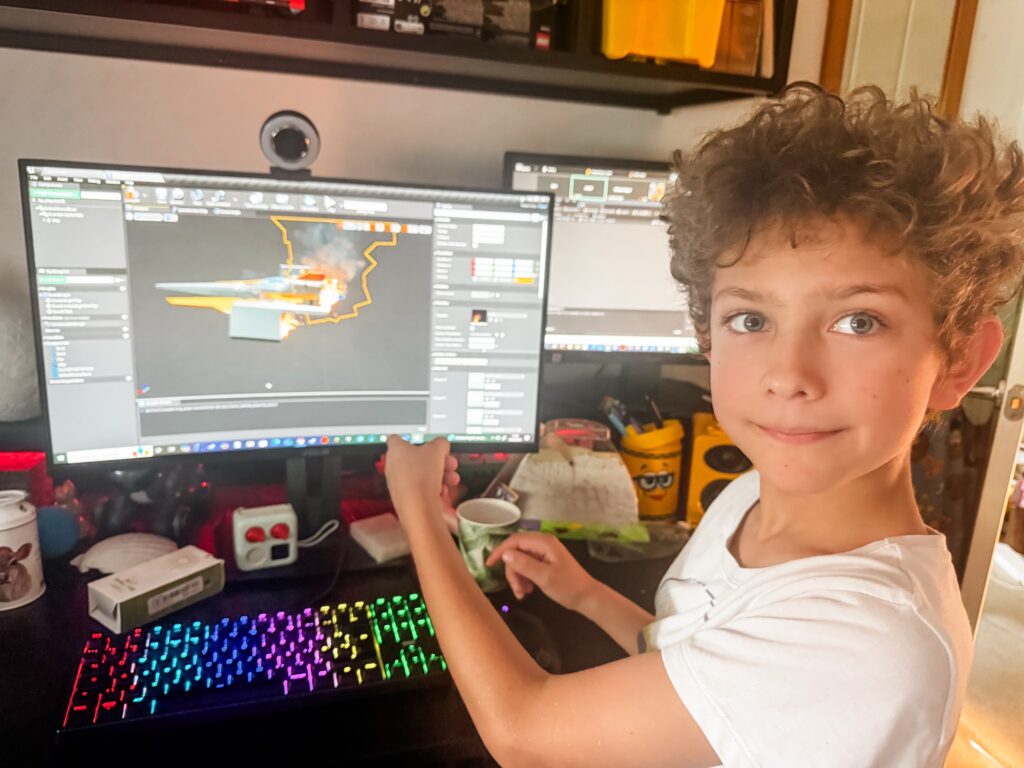
Each morning, he practically bounces out of bed, eager to continue working on his game project. He’s learning about game mechanics, level design, and the development process in ways that make these complex concepts accessible to young minds.
Yesterday, he spent an hour explaining to me about the course. Demonstrating problem-solving skills and logical reasoning that frankly amazed me. These aren’t just fun games he’s creating. He’s developing essential skills in critical thinking and analytical thinking that will serve him well in future careers.
The Perfect Work-From-Home Companion
From a practical standpoint, these camps have been an absolute godsend for my work routine. Whilst my son is absorbed in learning about game development tools, game engines, and design elements, I can take client meetings without interruption. He’s having a great time whilst developing coding skills and digital literacy – skills that are increasingly important in today’s world.
The online platform provides excellent online support, and the structured learning process means he’s productively engaged for hours. No more guilty feelings about excessive screen time when he’s actually learning valuable skills through interactive stories and hands-on projects.
Building Towards Real Qualifications
What sets Software Academy apart is their commitment to proper accreditation. By joining two summer camps of the same 3D Game Design course, my son will meet the NCFE requirement to achieve a Level 1 Award accredited qualification. This isn’t just a certificate to stick on the fridge. It’s a genuine qualification that provides a strong foundation for his future learning.
The NCFE qualification progression is clearly structured:
- Level 1 Award (equivalent to GCSE grades D-G)
- Level 2 Certificate (equivalent to GCSE grades A*-C)
- Level 3 Diploma (equivalent to A-Levels)
Each level takes one academic year to complete, and students progress through each level in order. My son is already excited about continuing with Level 2 starting in September. This gives me confidence that this isn’t just a summer fling but the beginning of a genuine learning journey.
Flexible Learning That Fits Real Life
What I particularly appreciate about Software Academy is their understanding of family life. Beyond summer camps, they offer term-time courses with just 1 hour per week during school terms. These are available in evenings or weekends. This flexibility means we can continue this valuable education alongside his regular schooling.
For families wanting even more flexibility, they also provide self-guided courses which include Games Coding & Programming, 3D Modelling & Animation, and AI & Machine Learning. These options ensure that learning can continue at whatever pace suits your child’s interests and your family’s schedule.
More Than Just Games
Watching my son’s progress has shown me that coding for kids through game design is one of the best ways to develop multiple skills simultaneously. He’s not just learning the basics of coding or how to use professional tools. He’s developing a deep understanding of user experience, creative problem-solving, and project management.
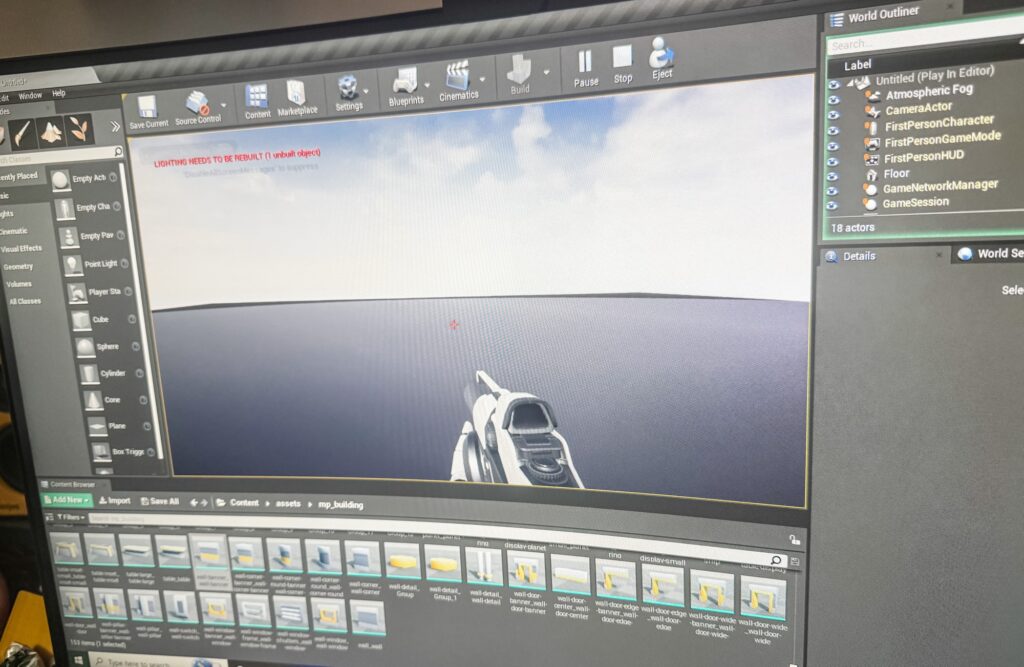
The technical skills he’s gaining with game engines and development tools are impressive. It’s the creative freedom and analytical thinking that really shine through though.
The Ripple Effect
The benefits extend far beyond the technical aspects. My son’s confidence has soared as he’s realised he can create something meaningful from scratch. He talks about game developers with genuine understanding now, appreciating the complexity behind even simple games. His logical reasoning has improved, and I’ve noticed this carrying over into his maths homework and general problem-solving approach.
He’s also connecting with young students from across the UK through the platform’s online community. Sharing ideas about special effects together, discussing the easiest game design approaches, and collaborating on fun projects. This social element has been particularly valuable, showing him that learning can be both educational and social.
Looking to the Future
As we continue into week 2 of his summer camp, I’m already planning for September’s Level 2 course. The step-by-step tutorials and comprehensive learning approach have given him such a solid grounding in the basics of game design. I can see this becoming a serious interest rather than just a passing phase.
For any parents considering Software Academy, I can honestly say it’s been transformational. My son is learning STEM concepts, developing digital literacy, and gaining practical skills in 3 d games development. All whilst having much fun that he doesn’t realise how much he’s learning.
The Bottom Line of Game Design for Kids
Software Academy’s approach to education recognises that young learners need engaging content that respects their intelligence and embraces the modern digital world our kids are inheriting. Through their structured progression from Level 1 through to Level 3, children can develop genuine expertise in game design whilst achieving recognised qualifications.
For working parents, these camps provide the perfect solution. Your child is productively engaged, learning valuable skills for the digital world, and achieving real qualifications whilst you get the uninterrupted work time you need. It’s a win-win situation that I wish I’d discovered sooner.
The combination of fun learning, proper accreditation, and flexible scheduling makes Software Academy an investment in your child’s future that pays dividends from day one. My son has found his creative outlet. I’ve found my work-life balance, and we’ve both discovered that learning can be the most enjoyable part of the day.