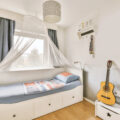


The most expensive bedroom furniture mistakes happen before anyone reaches the checkout. A bed that won’t clear the stair landing, or a super-king that leaves no space to walk past it, becomes a problem that money only makes worse. The fix costs nothing: measure, plan, and only then choose.
UK bedrooms are often small, built-in storage is rare, and older homes add narrow hallways and awkward stairs.
Measure the room before you look at beds
Start with a tape measure and the actual room, before the bed listings. Wall length matters, but so does circulation space – the clear floor needed to walk around the bed and to open wardrobes and drawers without a sideways shuffle. A bed pushed tight against one wall means one sleeper climbs over the other every night. Two people should be able to get ready at the same time without negotiating.
UK standard bed sizes describe the mattress. The furniture footprint is bigger. A king-size mattress measures 150cm by 200cm, and a super-king measures 180cm by 200cm. An upholstered frame can add 10cm or more to the finished width and length once the headboard and side rails are included, and that extra size is what determines whether the room works.
Mark the full frame outline on the floor with painter’s tape and live with it for a day or two. Open every door and drawer that shares the space, and check the outline against alcoves and chimney breasts, which steal usable wall length in many older bedrooms. Measure at floor level as well as waist height, because frames sit on the ground and walls are rarely straight. If the tape blocks a drawer run or a door swing, that bed is too big for that wall.
Write the measurements down and keep them on your phone. You’ll need them again for the delivery route and the retailer’s product page.
Plan the position around sockets, radiators and windows
Decide where the bed goes on paper before the frame arrives. The headboard wall needs to stay clear of radiators, windows, doors and the curtain stack, and it needs sockets within reach for lamps and phone charging. A headboard that covers the only socket on the wall means extension leads across the floor.
Watch the heating in particular. A tall headboard or an ottoman base pushed against a radiator blocks the warmth the room pays for, and a bed under a window fights the curtains every morning. Moving the plan 20cm on paper is free. Moving an assembled bed is not. Think about morning light as well, because a bed placed to catch a bright window will wake sleepers earlier than they planned.
If two people share the room, both need a reachable socket and a side they can get out of. Check the door swing as well, including en suite and wardrobe doors that open near the foot of the bed.
Walk the delivery route before you order
Plenty of UK homes have narrow hallways and awkward stairs, especially terraces and conversions. Measure every doorway, landing, ceiling height and turn along the route from the front door to the bedroom. Stair turns are the usual failure point, so measure the diagonal clearance as well as the width of the treads. If the bedroom sits in a flat, measure the lift and the communal entrance too.
Then check what the retailer actually delivers. Some couriers bring a bed to the room of your choice, while others stop at the kerb. Ask for the boxed dimensions before ordering, because a flat-packed frame solves most access problems and a one-piece headboard or assembled divan base is usually the item that refuses to turn the corner.
Skipping this step is what costs a Saturday. A bed that fits the room but not the stairs goes back, and returning large furniture takes time even when the retailer is helpful.

Choose the frame type for the room you have
Divan ottoman storage beds suit smaller bedrooms where a chest of drawers simply won’t fit. The gas-lift base raises the mattress to open storage underneath, so the whole footprint works twice. Bases open from the foot or the side, and the opening direction sets where the clear space has to be. A foot-opening base needs room at the end of the bed, a side-opening base needs room along that side, and the person lifting it needs standing space there too.
Drawer divans need a different kind of clearance. Check where the drawers sit in the base, because drawers near the headboard are often the ones a bedside table blocks. Handles have to be reachable, and each drawer needs space to pull out without hitting a wardrobe door. Bases come with different drawer layouts, so match the configuration to the side of the bed you can actually reach.
Panel beds and framed upholstered beds suit more open, symmetrical rooms, where the bed can sit centred on a wall with walking space on both sides. An upholstered headboard also adds real comfort for reading in bed. Open space beneath a frame is the simplest option of all – easy to clean under, and it suits households that already have enough storage.
Headboard style sets the mood of the scheme once the practical choice is made. Winged headboards feel enclosing and traditional. Panel designs sit flatter against the wall, and scroll or sleigh shapes bring curves into a boxy room. Check headboard height against window sills and sloped ceilings before settling on a tall design.
Treat fabric as a practical decision
Upholstered beds live in the real world of pets and children. Light colours show marks faster, and a tightly woven, stain-resistant fabric ages better in a busy household than a loose weave. Ask how the upholstery is meant to be cleaned, because many frames have fixed covers that won’t come off. Order samples where the retailer offers them, because screen colours rarely match the fabric in the box.
Compare retailers on the checklist
Online furniture photography is styled and cropped to sell. What a product page owes you is the plain detail: full external frame dimensions, delivery terms, assembly requirements and a returns policy that covers large items. Read those before the fabric gallery. Check the lead time shown at checkout against the one on the listing, because made-to-order fabrics can differ.
Returns terms matter more for beds than for most things you order online. Check who arranges and pays for collection if the bed doesn’t suit the room, and whether made-to-order upholstery is returnable at all. A restrictive returns clause can cost more than any discount code saves. Recent customer reviews help as well, especially ones that describe how delivery day went.
The same questions apply whether you buy on the high street or online, and a linked page such as RSB Furniture is one you might look at while you compare. Wherever you buy, the questions don’t change – where delivery stops, how the bed arrives, who assembles it, and what happens if it has to go back.
Match the mattress to the frame
Frame and mattress work as one system, so check them together before you commit. Confirm the depth the frame is built for, because a mattress that is too thick for an ottoman base can reduce the opening clearance of the lid. A very heavy mattress also changes how the lift mechanism feels in daily use.
Total bed height is easy to overlook. Frame height plus mattress depth decides how easy the bed is to get in and out of, which matters for anyone with stiff joints. Sheet fit is a separate question: it depends on the mattress dimensions and depth, so measure the mattress you own before settling on a frame.
If you’re keeping a mattress, check its size against the new frame with a tape measure, whatever the label says. Standard UK sizes are consistent, but older or imported mattresses can run differently, and a few centimetres of mismatch shows every time the bed is made. If you’re buying new, choose the mattress alongside the frame so the depths line up from the start.
Budget for the whole package
Frame prices are the numbers listings shout about, but the real cost of the bed is bigger. Add the mattress, bedding, delivery charges and any assembly service before comparing one retailer against another. A cheaper frame plus paid delivery and assembly can overtake a pricier bundle quickly. Delivery and assembly charges vary more than frame prices do, so the total is the only honest comparison.
The mattress deserves the largest share of that budget, because it does more for sleep than any headboard shape. A good frame supports the mattress and stays out of the way for years.
Old bed disposal belongs in the budget too. Some retailers remove the old frame for a fee, and councils collect bulky items, but neither happens automatically on delivery day. Bedding for a deeper mattress costs more as well, and deep fitted sheets are the purchase everyone forgets. Arrange disposal when you order, not when the new bed is blocking the hallway.
Order early, and in the right order
Upholstered and made-to-order bedroom furniture often takes several weeks to arrive. In a refresh or renovation, the bed should be one of the first things you order, well before the decorators leave. A delayed bed means a mattress on the floor.
Order fabric samples first, since a fabric decision can hold up a made-to-order bed. Measure the room and the delivery route, fix the frame type and mattress depth, then place the order with the delivery terms in writing. If the room is being decorated, book delivery for after the paint dries but place the order before the work starts. Clear the route the day before, and keep the measurements on your phone in case the crew asks.
Follow that sequence and delivery day should be uneventful.
Enjoyed this? Come along for the ride
Family adventures, gift guides and real working mum life, every week.